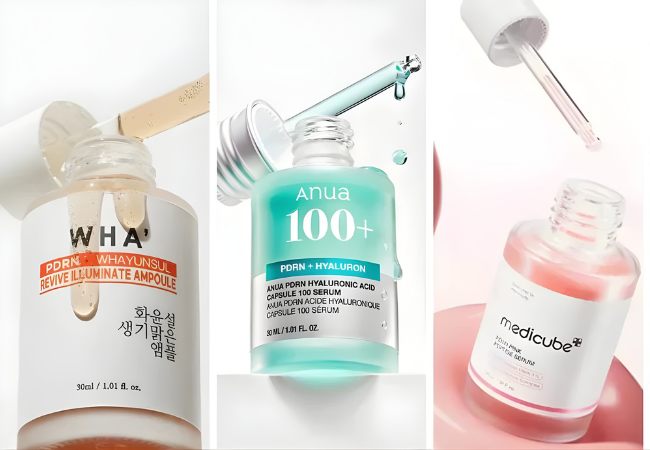
If you keep seeing PDRN in serums, skin boosters, facials, and glossy K-beauty product launches and wondering whether it is actually revolutionary or just the newest luxury skincare obsession, you are not alone.
PDRN is one of those ingredients that sounds extremely science-y, gets marketed like the future of skin repair, and somehow always ends up described with phrases like regenerative, healing, bouncy skin, and glass glow. Which, obviously, makes people curious. But also skeptical. As they should be.
Because when something starts trending this hard, especially in beauty, there are really only a few possibilities. Either it is genuinely interesting but being oversold. It is effective in a very specific context, but being generalized way too far. Or it is just great branding with a prettier lab coat on.
So let's actually break it down.
In this guide, we are covering what PDRN is in skincare, how it is supposed to work, what the real PDRN benefits may be, what side effects or downsides matter, whether topical PDRN is the same thing as in-office PDRN treatments, and whether this ingredient is actually worth your money.
This page contains affiliate links. If you purchase through these links, we may earn a small commission at no extra cost to you. We only recommend products we genuinely think fit the routine.
What Is PDRN?
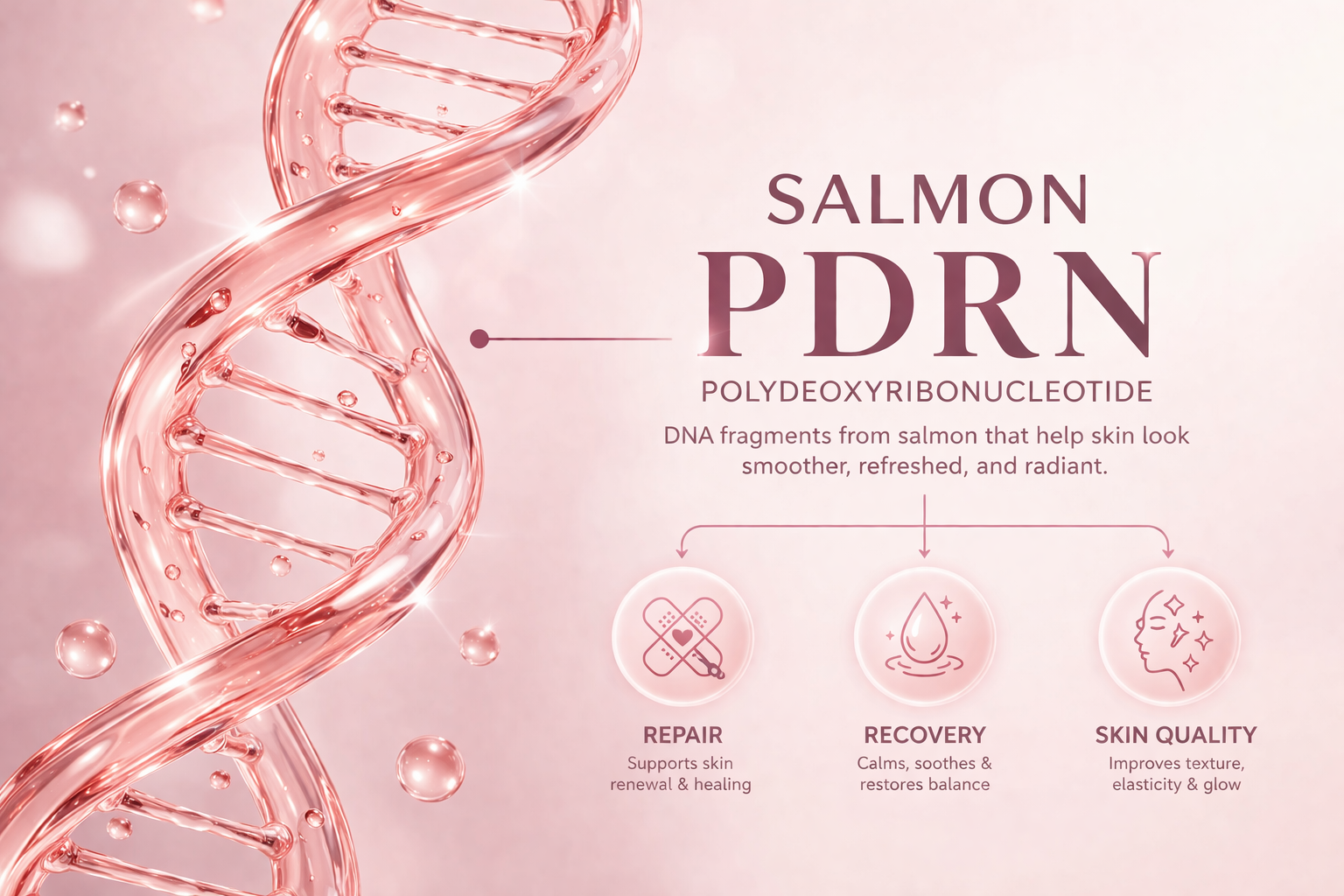
PDRN stands for polydeoxyribonucleotide. In skincare and aesthetic medicine, it usually refers to DNA fragments that are used for tissue-repair and regenerative purposes. A lot of beauty content calls it "salmon DNA," which is not totally wrong, but also not the most complete explanation.
PDRN has a medical background before it became a trendy beauty ingredient. It has been studied for wound healing, tissue repair, anti-inflammatory effects, and skin recovery. One major pharmacology review describes PDRN as a drug with tissue-repairing, anti-ischemic, and anti-inflammatory activity, and explains that many of its effects are linked to adenosine A2A receptor activation and salvage pathways involved in tissue regeneration. That review is here.
That medical background is exactly why PDRN became interesting in aesthetics. The beauty industry saw an ingredient associated with repair, recovery, and regeneration and basically said, okay, what if we use that for skin quality, barrier support, redness, texture, and post-procedure healing?
And that is where the hype really took off.
Is PDRN the Same Thing as Salmon DNA?
Sort of, but not always in the way people say it online.
A lot of commercial PDRN used in aesthetics is derived from salmon or trout DNA because those sources are considered highly purified and biocompatible. That is why you will keep seeing phrases like salmon DNA skin booster or salmon PDRN serum. But what actually matters more than the catchy "salmon DNA" label is the form, purity, delivery system, and whether you are talking about injectable/professional use or a normal topical product.
This distinction matters a lot, because one of the biggest mistakes people make with PDRN is assuming every serum with "PDRN" on the bottle works like an in-clinic skin booster. It doesn't automatically work that way. A treatment delivered by injection, mesotherapy, or alongside procedures like microneedling is a very different thing from a topical serum you pat on at home.
How Does PDRN Work on Skin?
The short version is that PDRN is thought to support skin repair processes rather than acting like a classic exfoliating or pigment-correcting active.
Mechanistically, the research around PDRN points to several possible effects:
- supporting tissue repair and wound healing
- modulating inflammation
- encouraging fibroblast activity and skin remodeling
- supporting angiogenesis, which is the formation of new blood vessels
- possibly helping skin quality, elasticity, and texture over time
Reviews of polynucleotides and PDRN in aesthetic medicine describe improvements in skin texture, hydration, wrinkle depth, elasticity, and overall facial appearance in various human studies, though the data are not perfectly uniform and the protocols vary a lot. That 2024 review is here.
That is also why PDRN gets grouped into the broader "regenerative skincare" conversation. It is being positioned less like a surface-level quick fix and more like something that may support the biological environment of the skin underneath.
Why Is PDRN Suddenly Everywhere in Skincare?
Because it sits right at the intersection of a few huge beauty trends:
- regenerative skincare
- K-beauty innovation
- skin barrier and skin quality over aggressive actives
- post-procedure recovery
- luxury "science-backed" product positioning
Instead of selling the old promise of just "erase wrinkles," PDRN products are usually sold around ideas like repair, bounce, glow, skin resilience, barrier support, and healthier-looking skin overall. That language is landing especially well right now because a lot of people are tired of irritating their face with stronger and stronger products.
If your audience is already into the skin longevity conversation, PDRN fits right into that world. It is less about chasing one dramatic overnight result and more about trying to improve skin quality over time.
What Are the Main PDRN Benefits for Skin?
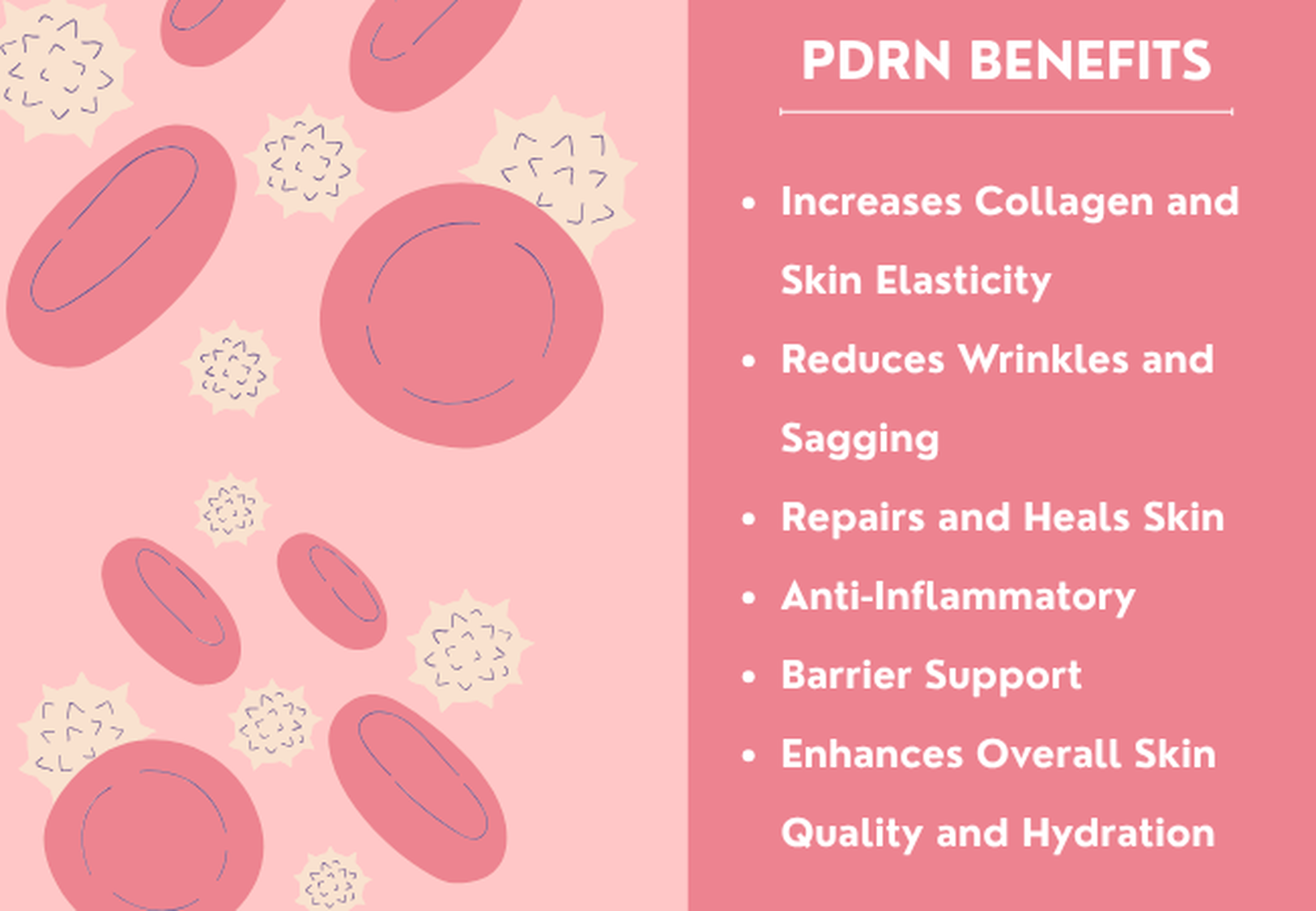
This is where the conversation needs to stay balanced. There are legitimate reasons people are interested in PDRN. But the strongest evidence is not the same for every use case.
1. Skin repair and recovery support
This is probably the most grounded benefit category. PDRN has a stronger history in wound healing and tissue repair than in general consumer skincare. Clinical and pharmacological literature consistently points to wound-healing and repair-related activity as a major reason it is used. That is one reason this review is so important.
2. Anti-inflammatory potential
PDRN is often discussed as having anti-inflammatory effects, which is part of why it shows up in post-procedure and redness-prone treatment conversations. If your skin is irritated, sensitized, or healing, this is one of the main reasons PDRN gets attention.
3. Support for texture, elasticity, and skin quality
Aesthetic reviews of polynucleotides report improvements in skin texture, wrinkle depth, hydration, and elasticity in human studies, especially in professional treatment contexts. This review summarizes that well. The important phrase there is professional treatment contexts. That is where a lot of the better evidence currently sits.
4. Barrier support and recovery-adjacent use
There is also growing interest in PDRN for barrier-improvement and skin-recovery applications. Experimental research has suggested barrier-improving effects, including enhanced wound healing and improved expression of barrier-related markers. You can read one example here. That does not mean every PDRN toner is instantly a barrier miracle, but it does help explain why the ingredient shows up in barrier-repair and recovery product conversations.
5. A lower-irritation alternative to harsher actives
One reason PDRN is attractive is not just what it may do, but what it may let some people avoid. If someone wants skin quality support without jumping straight into a super-irritating active routine, PDRN gets marketed as a gentler-feeling option. That is appealing, especially for people whose skin is already reactive or post-procedure.
But Here's the Important Part: Most PDRN Hype Blurs Treatments and Topicals Together
This is the part people need to understand before spending money.
When you see dramatic before-and-after claims around PDRN, a lot of the more compelling evidence is tied to:
- injectables
- professional skin boosters
- microneedling-assisted delivery
- clinical recovery contexts
That is not the same as a standard topical serum sitting on top of the skin.
There are topical and procedure-combination studies that are interesting, and there is definitely a reason the ingredient is being explored more broadly. But if a brand is implying that an at-home essence is equivalent to an in-clinic regenerative procedure, that is where you need to slow down.
Basically: PDRN is promising, but a lot of beauty marketing runs ahead of the evidence.
Is PDRN Better in In-Office Treatments Than in At-Home Skincare?
Right now, that is the safer interpretation.
At-home topical PDRN skincare may still be useful, especially in a supportive, recovery-focused routine. But the evidence base is generally more convincing for medical and aesthetic treatment settings than it is for your average serum launch.
That does not mean topical PDRN is fake. It means the question should be: how much benefit does topical PDRN deliver on its own, compared with the more treatment-driven uses that built its reputation?
That is a very different question from "is PDRN trending?" And it is the more useful one.
Who Is PDRN Most Likely to Appeal To?
PDRN usually makes the most sense for people who are interested in skin quality more than dramatic resurfacing. It tends to appeal to people who want:
- calmer-looking skin
- more bounce and resilience
- support after procedures
- recovery-focused skincare
- a more regenerative, less aggressive routine
It can also be appealing if your skin is in that weird phase where it looks tired, dull, stressed, or a little thinner-feeling and you are trying to shift toward a more supportive routine instead of just layering stronger actives forever.
That is also why PDRN naturally overlaps with barrier-repair and glow-recovery content. If your skin is currently irritated or unstable, you may also want to read How to Repair Your Skin Barrier.
What Are the Side Effects of PDRN?
This depends heavily on the form.
For topical skincare
Topical PDRN products are generally marketed as lower-irritation, but that does not mean "no risk." Any skincare product can still irritate sensitive skin depending on the full formula, fragrance, preservatives, essential oils, or whatever else is in the product. So if a PDRN serum breaks you out or stings, that does not automatically mean PDRN itself is the issue.
For microneedling or procedure-assisted PDRN
The side effects are often less about PDRN and more about the procedure. Microneedling literature describes common short-term effects like redness, swelling, pain, and temporary irritation, which are usually mild and resolve within days. That review is here.
For injectable or in-office use
You may see temporary redness, swelling, tenderness, bruising, and short-term sensitivity around injection or treatment sites depending on the protocol. In other words, if someone tells you their "PDRN treatment" caused redness for a day or two, that does not automatically mean the ingredient is harsh. It may just mean the delivery method was invasive enough to cause expected downtime.
Could PDRN Break You Out?
Maybe, but not in some dramatic universal way.
If a topical PDRN product breaks you out, it could be because:
- the formula is too rich for your skin
- the overall product contains breakout-triggering ingredients for you
- your skin is reactive or barrier-damaged already
- you layered it into a routine that is too much
PDRN itself is not mostly known as a breakout-triggering ingredient. But "regenerative" does not automatically mean universally compatible. Especially if the product is wrapped inside a heavier, richer, or fragrance-loaded formula.
If your skin is acne-prone and sensitized at the same time, read Can a Damaged Skin Barrier Cause Breakouts? Yes — Here's How because that overlap matters more than people think.
Is PDRN Worth It for Skin Barrier Repair?
This is where the answer gets nuanced.
Potentially, yes — but not because it is a miracle ingredient that replaces the basics.
If your skin barrier is damaged, the first line of help is still the boring stuff that works:
- stop over-exfoliating
- use a gentle cleanser
- support the barrier with moisturizer
- reduce irritation
- give your skin consistency
PDRN may fit into that type of routine as a recovery-supportive ingredient, especially if your skin is post-procedure, fragile, or visibly stressed. But it is usually a support player, not the entire protocol.
So if someone's barrier is destroyed and they are betting everything on one expensive PDRN ampoule while still using harsh cleansers and acids, that is not really a PDRN issue. That is a routine issue.
Is PDRN Good for Anti-Aging?
It is more accurate to call it a skin-quality and regeneration-adjacent ingredient than a simple anti-aging ingredient.
That distinction matters because PDRN is not really being sold as "erase ten years overnight." It is more about supporting the way skin looks and behaves over time: smoother, calmer, more hydrated, more resilient, sometimes with improvements in fine lines, elasticity, and overall skin quality.
That is also why it pairs naturally with the newer skin-longevity positioning you are seeing across luxury skincare and aesthetics. It fits the "invest in healthier-looking skin" angle more than the old "blast every wrinkle away" angle.
So… Is PDRN in Skincare Actually Worth It?
Here is the honest answer: PDRN is interesting enough to be worth paying attention to, but not in the magical way social media sometimes implies.
If you are thinking about it in the smartest way, the answer looks like this:
- Worth it: if you are interested in recovery-focused, skin-quality skincare, especially if your skin is sensitive, post-procedure, dull, or stressed.
- Worth it: if you understand that PDRN is more promising in professional or procedure-adjacent contexts than in a random trendy serum.
- Not worth it: if you expect one topical product to behave like an injectable treatment.
- Not worth it: if the formula is expensive but the rest of the product is generic, irritating, or clearly built around hype.
So no, I would not call PDRN a scam. But I also would not call every PDRN serum revolutionary just because the ingredient sounds advanced.
What to Look for If You Want to Try PDRN
If you are curious and want to try a PDRN product, here is the smarter approach:
- look at the whole formula, not just the hero ingredient
- avoid products overloaded with fragrance or unnecessary irritants
- think about your goal: glow, recovery, texture, post-procedure support, or barrier comfort
- be realistic about topical results
- do not compare an at-home serum to an in-clinic treatment
And honestly, if your skin is already stressed, supporting your barrier first will usually matter more than chasing the trendiest regenerative ingredient.
What PDRN Is Not
Sometimes the fastest way to understand an ingredient is to say what it is not.
- It is not a retinoid.
- It is not a classic exfoliating acid.
- It is not Botox in a bottle.
- It is not guaranteed to transform your skin just because it is expensive.
- It is not automatically better than a great basic barrier routine.
This is really important because beauty trends keep collapsing "interesting science" into "you need this now." And those are not the same thing.
My Honest Take on PDRN
I think PDRN is one of the more interesting skincare trends right now, mostly because it is not random. There is an actual medical and repair-oriented background behind it, which gives it more credibility than a lot of trend ingredients that go viral for no reason.
But I also think the beauty industry is doing what it always does: taking an ingredient with a real scientific story and stretching that story across every format, every promise, and every marketing angle possible.
So if you are asking me whether PDRN is worth being curious about? Yes.
If you are asking whether every PDRN product is worth the money? No.
If you are asking whether topical PDRN is automatically going to deliver injectable-level results? Definitely no.
The smartest way to see it is this: PDRN is promising, but context matters. Delivery matters. Formula matters. And your expectations matter.
Final Thoughts
PDRN in skincare is not just another made-up beauty word. It has a real scientific and medical background tied to repair, inflammation modulation, and tissue support. That part is real. But the consumer beauty version of the story can get a little ahead of itself.
If your skin goals are centered around recovery, resilience, calmer texture, barrier support, and long-game skin quality, PDRN makes sense as an ingredient to watch. If your expectations are realistic, it may be a genuinely nice addition to the right routine.
But if you are expecting one expensive serum to deliver dramatic in-clinic regeneration from your bathroom mirror, that is where the hype starts outrunning reality.
The smartest next step is not to chase the trend blindly. It is to build a routine that actually supports your skin first — and then decide whether PDRN is a helpful upgrade, or just pretty packaging with a good story.