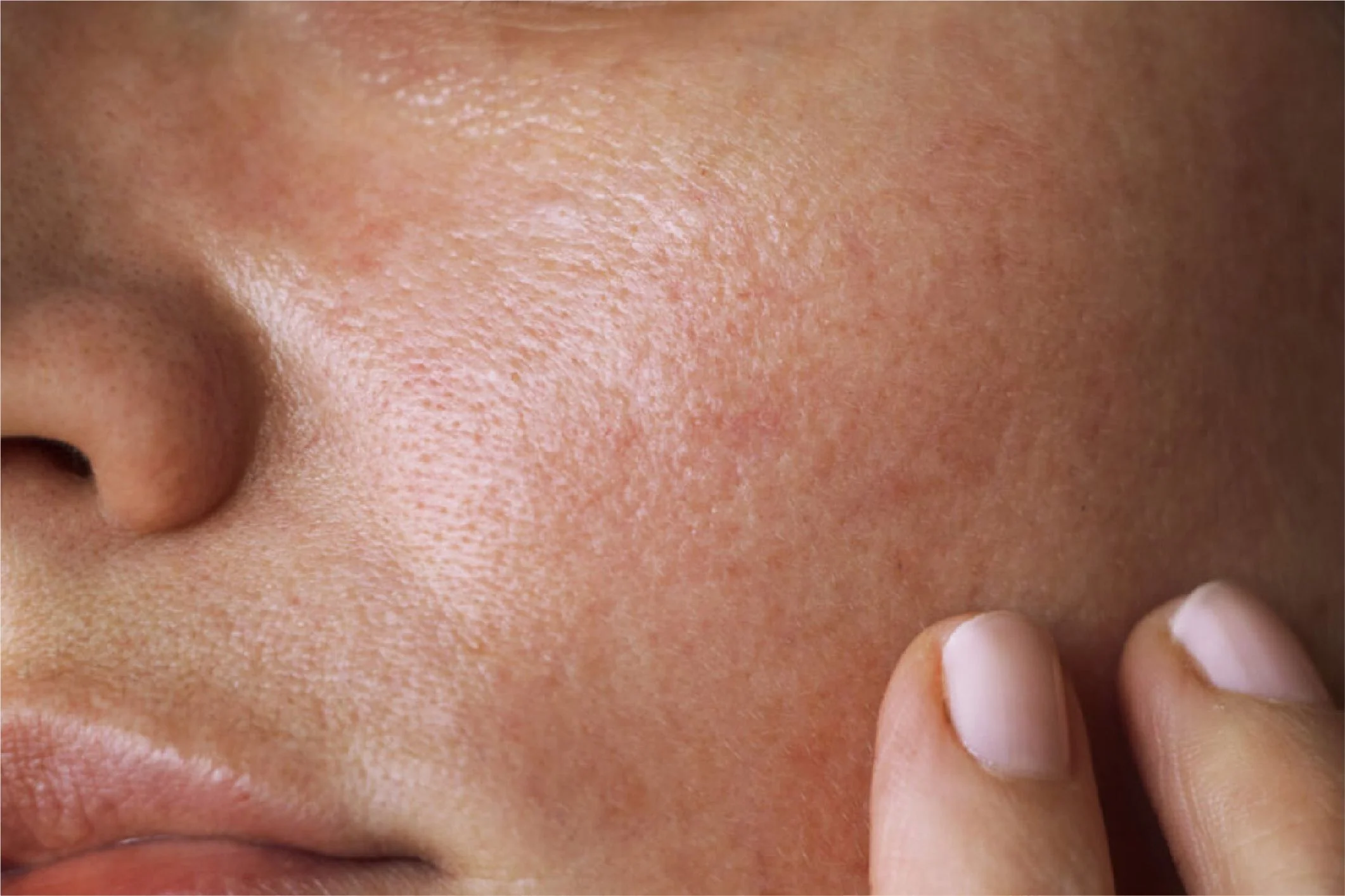
If your skin looks shiny but feels tight, gets greasy fast but still flakes, or somehow manages to be oily, dull, rough, and breakout-prone at the same time, you are probably not imagining it.
You may be dealing with oily but dehydrated skin — one of the most confusing skin situations because it makes people think they need to dry their face out more, when that usually makes the problem worse.
This is where a lot of girls get stuck. Your forehead is shiny by noon, your nose gets oily, and you are still looking in the mirror wondering why your skin feels tight after cleansing, why your makeup clings to patches, or why your face seems greasy and thirsty at the same time. It sounds contradictory, but it actually makes perfect sense once you separate oil from hydration.
Oil and water are not the same thing. Your skin can produce more sebum and still be low in water. That is why oily skin can still feel uncomfortable, look dull, or react badly to harsh products. Research on skin measurements supports that hydration and sebum are separate skin characteristics, which is exactly why oily-but-dehydrated skin is possible. Read the research here.
And the harder truth? A lot of oily-but-dehydrated skin is self-inflicted by routines that are too aggressive: strong cleansers, over-exfoliation, too many acne products, skipping moisturizer, and trying to "mattify" your face into submission.
In this guide, we are breaking down the signs of oily but dehydrated skin, what causes it, how it connects to skin barrier damage, and the best routine to calm it down without making your skin feel heavy, greasy, or overwhelmed.
This page contains affiliate links. If you purchase through these links, we may earn a small commission at no extra cost to you. We only recommend products we genuinely think fit the routine.
What Does Oily but Dehydrated Skin Actually Mean?
Oily but dehydrated skin means your skin is producing oil, but still does not have enough water. So yes, your skin can look shiny and still be dehydrated. That is the core thing most people misunderstand.
Oily skin refers to sebum production. Dehydrated skin refers to a lack of water in the skin. Those are two different issues, which is why one does not cancel out the other.
This is also why so many oily skin routines backfire. The minute people see shine, they assume they need stronger foaming cleansers, more stripping ingredients, or less moisturizer. But the American Academy of Dermatology specifically advises people with oily skin to use a gentle cleanser and notes that using a face wash that is too harsh can irritate the skin and trigger increased oil production. Their oily skin guidance is here.
So if your skin is oily but also feels tight, thirsty, papery, patchy, or suddenly reactive, the issue may not be "too much moisture." It may be that your skin is under-hydrated and over-irritated at the same time.
7 Signs You Have Oily but Dehydrated Skin
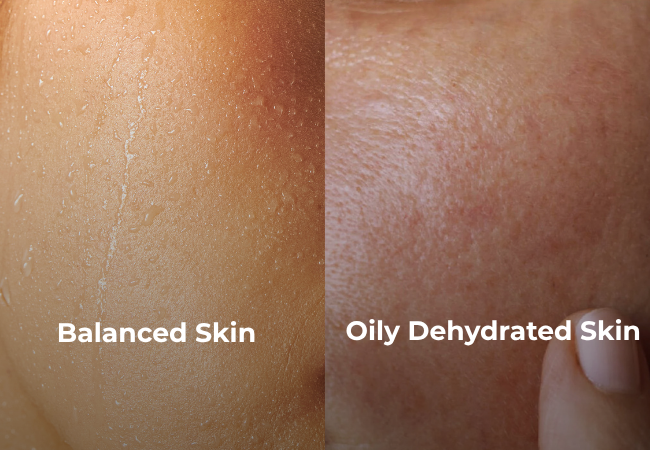
1. Your skin feels tight after cleansing, even though it gets oily later
This is one of the biggest signs. If your face feels squeaky, stretched, or thirsty right after washing, but then gets shiny again a few hours later, that is a classic oily-but-dehydrated pattern. Tightness after cleansing is usually not a sign that your cleanser is "working." It is often a sign that it is too stripping for what your skin actually needs.
2. Your face looks shiny, but not healthy or glowy
There is a difference between balanced, hydrated radiance and that weird shiny-but-tired look. Oily but dehydrated skin often looks greasy on the surface but dull underneath. The glow is not really glow. It is more like a thin layer of shine sitting on skin that still looks stressed.
3. Makeup goes patchy, cakey, or clings in random places
If your foundation separates by midday, catches on rough patches, or somehow looks dry and greasy at once, dehydration may be part of the problem. Skin that does not have enough water often holds makeup badly, even if it still gets oily over the day.
4. You get oily fast, but your skin still feels uncomfortable
This is the confusion zone. People assume oily skin should feel cushioned or moisturized, but oily-but-dehydrated skin often still feels uncomfortable. It may sting slightly, feel hot, look rough, or feel like no product really "sinks in" properly.
5. You break out more when you try to dry your skin out
If every time you go harder on acne products your face gets more irritated, more flaky, and somehow still congested, dehydration and barrier stress may be driving the cycle. Cleveland Clinic notes that skin irritation and harsher products can worsen oiliness because irritated skin may produce more oil. Their oily skin guidance explains that here.
6. Your products sting more than they used to
If products that used to feel normal suddenly burn, sting, or flush your skin, that is a red flag that dehydration may be overlapping with barrier damage. Oily-but-dehydrated skin often slides into an irritated, reactive state if you keep stripping it.
7. Your skin looks oily and flaky at the same time
This is one of the clearest signs. If you see shine in one light and flakes in another, or if your nose is greasy while the skin around your mouth or cheeks looks papery, dehydrated skin may be layered over an oily skin type.
What Causes Oily but Dehydrated Skin?
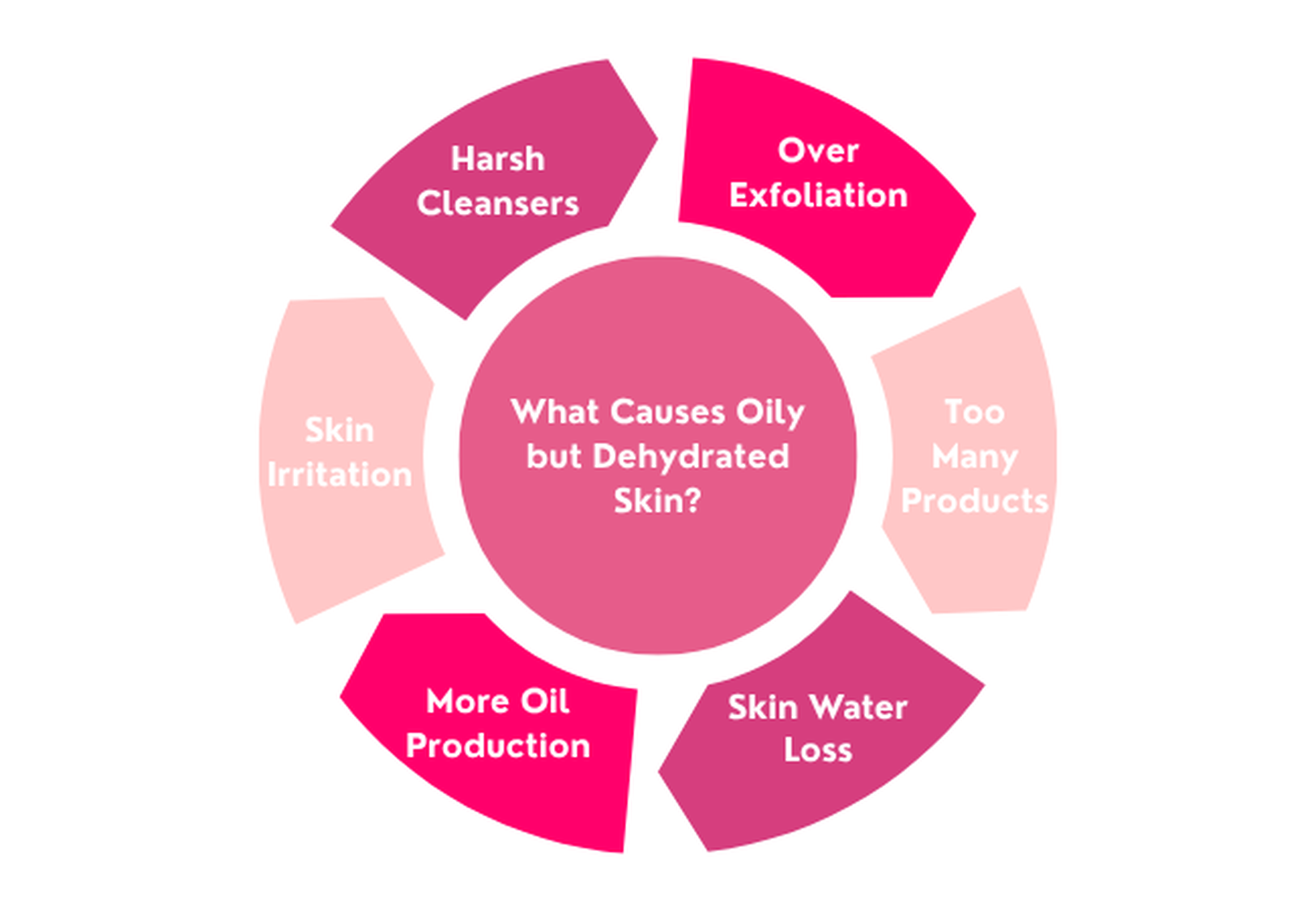
Usually, it is not one dramatic mistake. It is a build-up of habits that leave your skin stressed, over-cleansed, under-supported, or constantly trying to compensate.
1. Harsh cleansers
One of the most common causes is a cleanser that is too aggressive for your face. A lot of oily skin products are marketed like they need to leave you "super clean," but if your face feels stripped after washing, that is usually a bad sign. The AAD recommends a gentle cleanser for oily skin and warns that harsh face wash can irritate the skin and trigger increased oil production. Read AAD's guidance here.
2. Over-exfoliation
Using acids, scrubs, exfoliating pads, or acne treatments too often can strip your skin faster than it can recover. That leaves you with more water loss, more irritation, and often more shine over time.
3. Skipping moisturizer because you are oily
This is such a common mistake. People with oily skin often avoid moisturizer because they think it will make them greasier. But when your skin is under-supported, it often stays uncomfortable and unstable longer. A lightweight, barrier-supportive moisturizer is usually part of the fix, not the problem.
4. Dry weather, indoor heat, and environmental stress
Mayo Clinic notes that cold or dry weather, sun damage, harsh soaps, and overbathing can all contribute to dry skin. Even if your skin type is oily, low humidity and harsh routine habits can still leave the surface dehydrated. Read Mayo Clinic's overview here.
5. Too many "oil control" products
If your entire routine is built around mattifying, stripping, or drying out your skin, there is a good chance you are reinforcing the exact cycle you are trying to fix.
6. Barrier damage
This is a major one. Once your barrier is weakened, water escapes more easily and your skin becomes more reactive. That means you can look shinier while also feeling drier underneath. Barrier dysfunction and water loss are closely linked, and ceramide-focused barrier support has been shown to improve dry skin and barrier function. You can read that review here.
Oily but Dehydrated Skin vs. Damaged Skin Barrier
This is where it gets a little messy, because these two often overlap.
Oily but dehydrated skin means your skin is lacking water. A damaged skin barrier means the outer protective layer of your skin is not functioning properly, so your skin loses water more easily and becomes more vulnerable to irritation.
So yes, you can have both. In fact, a lot of people do.
If your skin feels oily, tight, flaky, stingy, and easily irritated all at once, there is a good chance dehydration and barrier damage are layered together. That is exactly why harsh, "fix it faster" routines tend to backfire.
If you want the deeper side-by-side breakdown, read Damaged Skin Barrier vs Dehydrated Skin: How to Tell the Difference.
Why Oily but Dehydrated Skin Often Breaks Out More
This is another reason the topic matters so much. Oily but dehydrated skin is often more breakout-prone because it sits in a frustrating middle zone: more oil, more irritation, worse product tolerance, and a higher chance of routine overload.
When your face is dehydrated, you often react by doing more: more acids, more "oil control," more foaming, more spot treatments. But that can leave the skin more inflamed and more likely to break out, especially if the barrier is already stressed.
If that sounds familiar, also read Can a Damaged Skin Barrier Cause Breakouts? Yes — Here's How. It explains the exact cycle in more detail.
The Best Routine for Oily but Dehydrated Skin
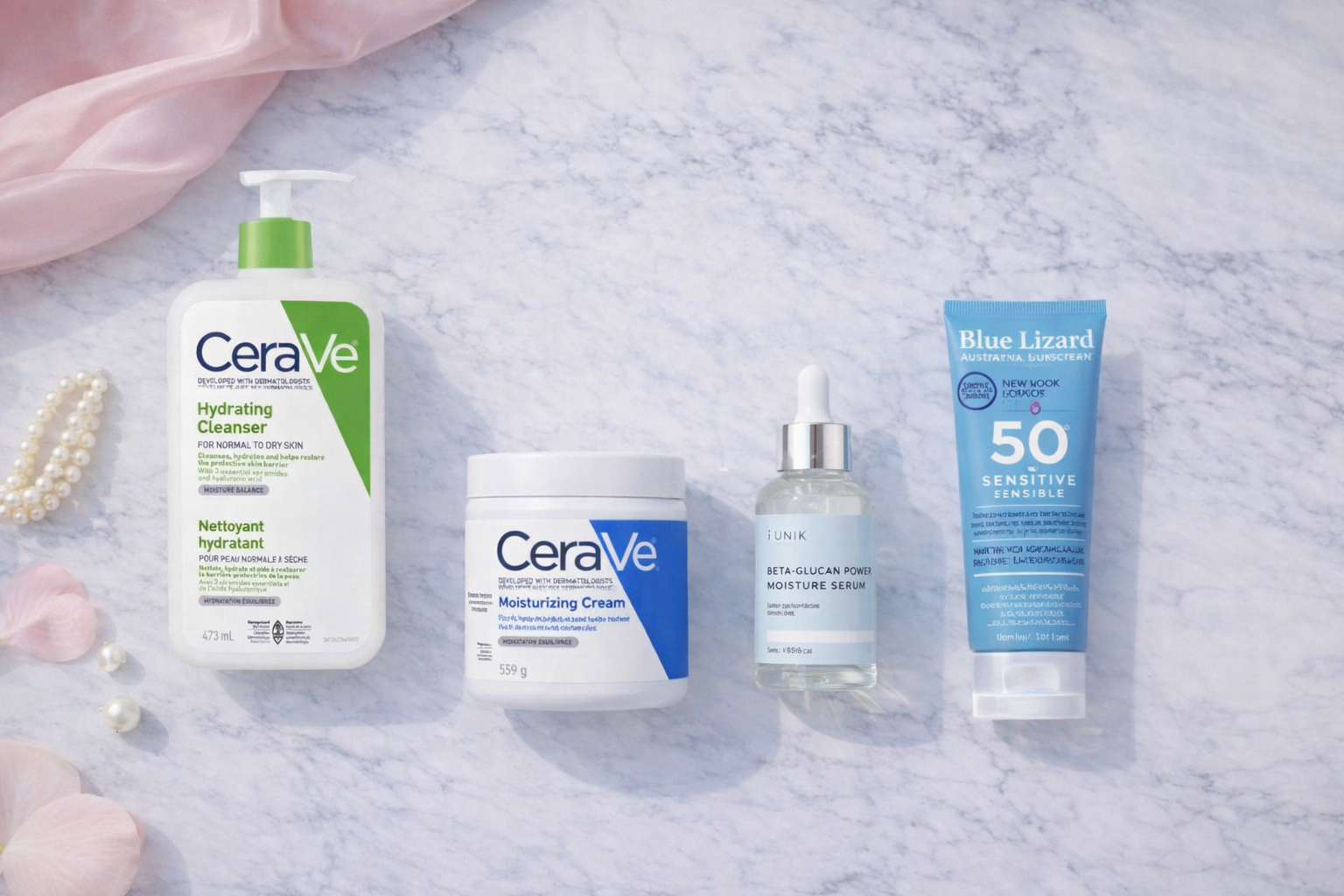
The goal is not to make your face bone dry. The goal is to reduce irritation, improve hydration, and support your skin enough that it stops acting so chaotic.
Morning
- Use a gentle cleanser or rinse only. If your skin feels extra stripped in the morning, a lukewarm water rinse may be enough.
- Add a light hydrating step. Think glycerin, hyaluronic acid, or beta-glucan if your skin tolerates it.
- Use a lightweight barrier-supportive moisturizer. This helps support comfort and reduce water loss.
- Finish with sunscreen. Daily SPF matters even more if your skin is already stressed.
Night
- Cleanse gently. Remove sunscreen, oil, and buildup without trying to strip your skin.
- Use hydrating support if tolerated. One calming hydrating layer is enough.
- Apply moisturizer consistently. This is where a lot of the repair support happens.
- Add an overnight recovery step if your skin feels extra depleted.
Biggest routine mistakes to stop right now:
- Washing with hot water
- Using harsh "oil control" cleansers daily
- Exfoliating every time your skin looks textured
- Skipping moisturizer because your face is shiny
- Trying new products every few days
- Layering multiple acne actives on already irritated skin
What Ingredients Help Oily but Dehydrated Skin Most?
The sweet spot is ingredients that support hydration and barrier comfort without making your routine feel heavy or suffocating.
- Glycerin: excellent for water support and usually very well-tolerated.
- Hyaluronic acid: useful for hydration, especially when paired with moisturizer.
- Beta-glucan: great for that calm, hydrated, less reactive feeling.
- Ceramides: especially helpful if dehydration is overlapping with barrier stress.
- Panthenol: supportive for skin that feels tight or uncomfortable.
If your skin is oily and sensitive, the goal is not the most impressive ingredient list. It is the most stable, repeatable routine.
What to Avoid If Your Skin Is Oily but Dehydrated
If you are trying to get your skin back on track, avoid:
- harsh foaming cleansers that leave your face squeaky
- daily scrubs or over-exfoliating acids
- alcohol-heavy "oil control" products that irritate your skin
- skipping moisturizer completely
- using your strongest acne products all over your face every day
- judging a routine after two days and changing everything again
Cleveland Clinic also advises people with oily skin to avoid harsh face products and not scrub too hard, because irritation can actually make oiliness worse. That advice is here.
How Long Does It Take to Fix Oily but Dehydrated Skin?
Usually, the first things to improve are:
- less tightness after cleansing
- less stinging
- smoother texture
- makeup sitting better
- skin feeling less "angry" overall
If the issue is mild, you may notice improvement in a week or two. If your skin barrier is also damaged, it may take longer. Mayo Clinic notes that dry skin often responds well to moisturizers and simple lifestyle measures like avoiding long, hot showers, but the main thing is consistency. Their treatment overview is here.
The biggest mistake is re-triggering the problem every few days by going back to aggressive products too soon.
Product Direction That Makes Sense
If your skin feels shiny, tight, rough, or randomly reactive, a barrier-first routine makes more sense than trying to "dry the oil away."
For a simple anchor step, a ceramide-based moisturizer is usually one of the smartest things to add back in. That is why CeraVe Moisturizing Cream fits this topic so well. It helps support moisture retention and barrier function without requiring a complicated routine around it.
If your skin feels especially depleted, the BIODANCE Bio-Collagen Real Deep Mask can make sense as a comfort-focused reset step. Not because your skin needs ten more products, but because sometimes it needs one calmer, hydration-first one.
If you want a done-for-you version of the kind of lineup that works best here, go to our Skin Barrier Repair Routine.
The Bottom Line
Oily but dehydrated skin is real, common, and way more fixable than it feels when you are in the middle of it.
If your face is shiny but tight, greasy but rough, or breakout-prone and flaky at the same time, the answer is usually not more punishment. It is more balance.
That means:
- gentler cleansing
- less over-exfoliation
- consistent hydration
- barrier support
- stopping the cycle of stripping and overcorrecting
Your skin does not need to be bullied into behaving. It usually just needs a routine that makes more sense for what is actually happening.