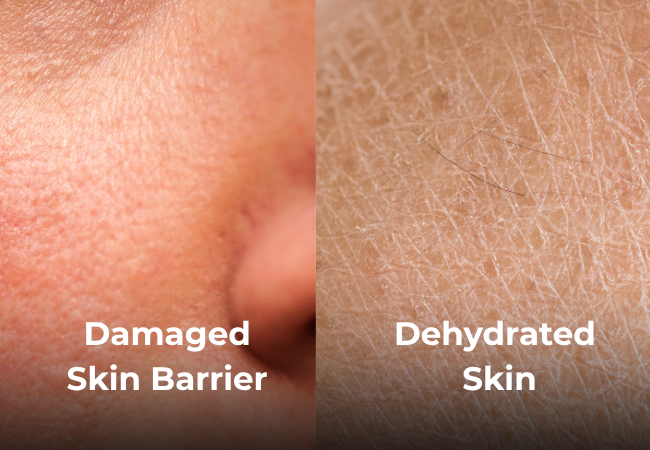
If your skin feels tight, dull, stingy, flaky, shiny, rough, or somehow oily and dry at the same time, you are probably asking the exact right question: is this a damaged skin barrier, or is my skin just dehydrated?
And honestly, this is one of the biggest reasons so many girls stay stuck in a cycle of buying more skincare, adding more actives, and somehow making their face look worse instead of better. Because while damaged skin barrier and dehydrated skin can look similar, they are not exactly the same thing — and the right fix depends on which one is actually driving the problem.
Here's the simple version: dehydrated skin is skin that lacks enough water. A damaged skin barrier means the outer protective layer of your skin is not functioning properly, so your skin loses water more easily and becomes more vulnerable to irritation. That outer barrier, especially the stratum corneum, depends on lipids like ceramides to help retain water and reduce dehydration.
That overlap is exactly why the whole thing gets confusing. A damaged barrier can make skin dehydrated faster. Dehydrated skin can also feel worse when the barrier is already irritated, over-exfoliated, or inflamed. So if your skin has been feeling "off" in a way that is hard to explain, this post is here to make it obvious.
In this guide, we are breaking down damaged skin barrier vs dehydrated skin, the signs of each, what causes them, how to tell the difference in real life, and what kind of routine makes the most sense depending on what your skin is actually doing.
This page contains affiliate links. If you purchase through these links, we may earn a small commission at no extra cost to you. We only recommend products we genuinely think fit the routine.
Why So Many People Confuse Damaged Skin Barrier vs Dehydrated Skin
The reason this topic is so confusing is that both problems can make your skin feel uncomfortable, look dull, and stop behaving the way it normally does. In both cases, you may notice tightness after cleansing, rough texture, makeup clinging to dry areas, and skin that suddenly looks less glowy and more stressed.
But the deeper difference is this: dehydrated skin is mainly about water, while barrier damage is mainly about function. If your barrier is weak, your skin is not holding onto moisture efficiently and is also less protected from irritation, friction, and environmental stress. That is why barrier damage tends to come with a more reactive, stingy, or inflamed feeling — not just a thirsty one.
So if you have ever thought, "Why is my face oily but dry?" or "Why does my moisturizer sting now?" or "Why does my skin look dull no matter what I use?" you are already in the right conversation.
What Is a Damaged Skin Barrier?
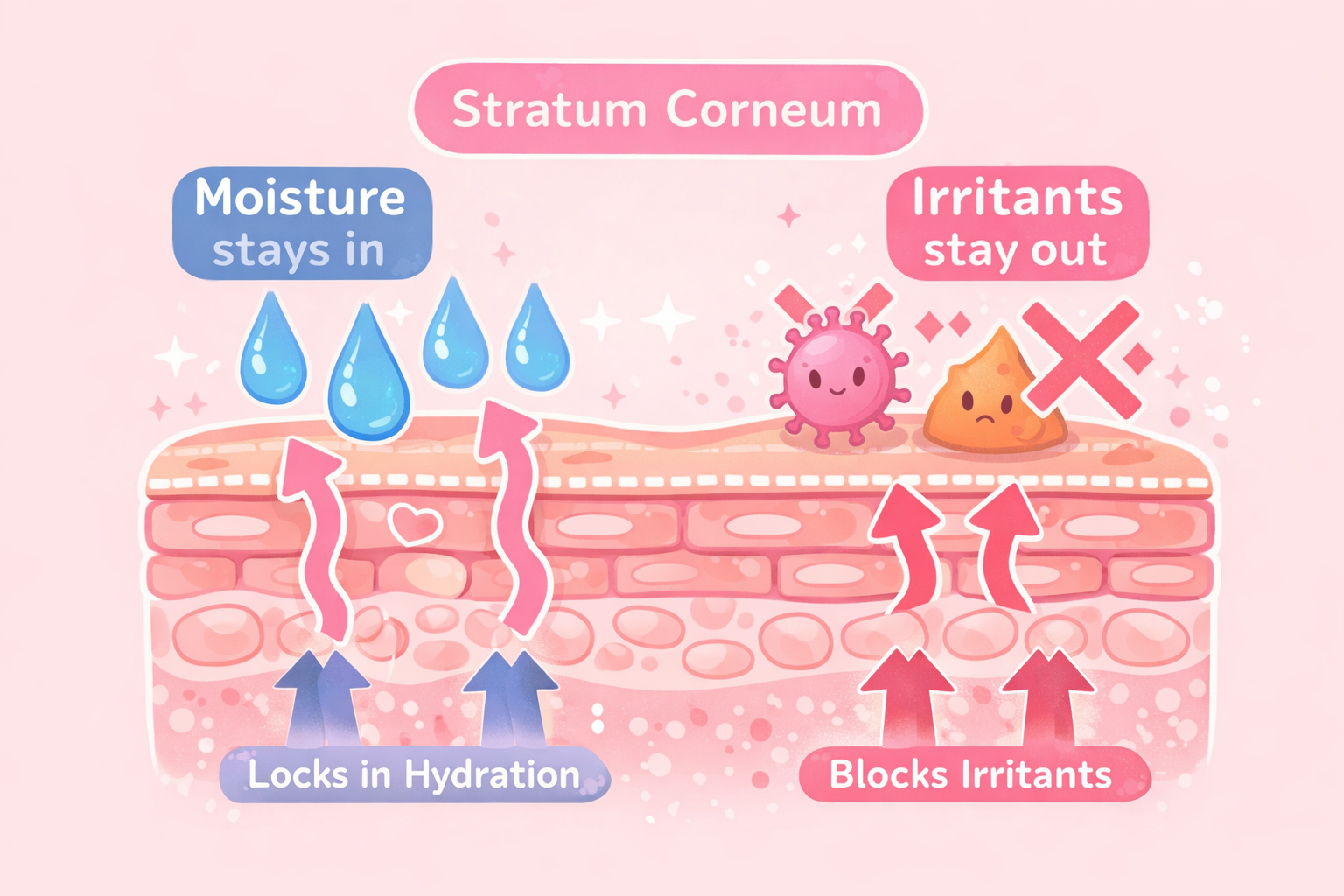
Your skin barrier mainly refers to the outermost layer of your skin, especially the stratum corneum. It acts like a protective shield that helps keep water in while keeping irritants, allergens, and microbes out. It is supported by structural lipids such as ceramides, cholesterol, and fatty acids, which help maintain hydration and reduce transepidermal water loss, also called TEWL.
When that barrier is compromised, your skin becomes worse at retaining water and more likely to react to things it used to tolerate. Cleveland Clinic lists acne, dry or flaky skin, inflammation, itchiness, rough patches, tenderness, and especially stinging when you apply products as common signs that the skin barrier has been damaged.
Cleveland Clinic lists acne, dry or flaky skin, rough patches, tenderness, and stinging when applying products as common signs of a damaged skin barrier. See their overview here.
This is why damaged-barrier skin can feel so confusing. It is not always just "dry." It can also feel irritated, hot, red, stingy, flaky, and unexpectedly breakout-prone. That combination of dryness plus sensitivity plus instability is one of the biggest clues that your issue is not just low hydration.
What Is Dehydrated Skin?
Dehydrated skin is skin that does not have enough water. That does not automatically mean you have a dry skin type. You can have oily skin and still be dehydrated. You can also have combination skin, acne-prone skin, or sensitive skin and still deal with dehydration.
In real life, dehydrated skin often looks like skin that feels tight or tired, appears dull, has more obvious fine lines, and seems to drink up hydrating products quickly. It can also be the reason your face looks shiny while still feeling uncomfortable underneath. Oil and hydration are not the same thing, which is why someone can look oily on the surface but still feel thirsty or papery.
If barrier damage is about a weak shield, dehydration is more about a low internal water state at the surface of the skin. It is usually less dramatic and less inflammatory than a true barrier problem, although the two often overlap.
Damaged Skin Barrier vs Dehydrated Skin: The Fastest Real-Life Difference
If you want the quickest way to separate them, use this framework:
Dehydrated skin usually feels:
- tight
- dull
- slightly rough
- less bouncy or plump
- oily on top but thirsty underneath
Damaged skin barrier usually feels:
- stingy
- reactive
- red or inflamed
- flaky or irritated
- suddenly unable to tolerate products you used to be fine with
So the fastest difference is this: dehydration feels thirsty; barrier damage feels irritated. And if your skin feels thirsty and irritated, you may have both at once.
Signs You're Probably Dealing With Dehydrated Skin
You may be dealing more with dehydrated skin if:
- Your skin feels tight after cleansing, but not dramatically red or angry.
- Your face looks dull or tired even though it still gets shiny.
- Your makeup clings to dry-looking patches or sits strangely by the end of the day.
- Fine lines seem more visible when your skin is stressed, tired, or under-moisturized.
- Your skin improves pretty quickly when you add hydrating layers and stop over-cleansing.
This is where humectants like glycerin, hyaluronic acid, or beta-glucan often help. They are not repairing a broken barrier all on their own, but they can improve water content and help your skin feel less papery and strained.
Signs You're Probably Dealing With a Damaged Skin Barrier
You may be dealing more with a damaged barrier if:
- Products suddenly sting or burn.
- Your skin looks red, irritated, inflamed, or more reactive than usual.
- You have flaky, rough, scaly, or sore-feeling patches.
- You recently overused exfoliants, retinoids, acne treatments, or strong cleansers.
- Your face feels more sensitive to weather, heat, friction, or even plain water.
- You are breaking out while also feeling dry and irritated.
This is especially common if you have been trying to "fix" breakouts by drying them out aggressively. The American Academy of Dermatology warns that exfoliating while using products like retinol or benzoyl peroxide can worsen dry skin and even acne breakouts.
The American Academy of Dermatology warns that overusing exfoliating products can worsen dryness and irritation and even make breakouts harder to manage. Read AAD's guidance here.
Can You Have Both at the Same Time?
Yes — and a lot of people do. In fact, this is probably one of the most common real-life scenarios.
This is the person whose skin feels:
"oily but dry,"
"shiny but rough,"
"tight but still congested,"
or "randomly stingy even though I'm moisturizing."
That combination often means the barrier is weakened and the skin is not holding onto enough water. So the solution is usually not stronger treatment. It is a calmer, more supportive routine that stops stripping your face while gently improving hydration.
What Causes Dehydrated Skin?
Dehydrated skin is often driven by a combination of environment, routine habits, and not enough supportive hydration. Common causes include:
- cold or dry air
- hot water
- over-cleansing
- not using enough moisturizer
- too many drying acne products
- indoor heating and low humidity
Mayo Clinic lists cold or dry weather, sun damage, harsh soaps, and overbathing as common causes of dry skin. Low-humidity environments can also reduce skin hydration and make tightness worse over time.
Mayo Clinic also notes that harsh soaps, sun damage, cold weather, and overbathing can all contribute to dry, uncomfortable skin. Read Mayo Clinic's overview here.
What Causes a Damaged Skin Barrier?
Barrier damage usually comes from accumulated irritation rather than one dramatic event. The most common triggers are:
- over-exfoliation
- stacking too many actives together
- harsh cleansers
- retinoid or acne-treatment overload
- dry weather, wind, and indoor heat
- friction, contact irritation, or dermatitis
- sun exposure and chronic skin stress
Cleveland Clinic recommends gentle, fragrance-free products, regular moisturizing, and SPF 30+ when dealing with a damaged barrier. AAD also consistently warns against over-scrubbing and over-exfoliating, especially on already dry, sensitive, or acne-prone skin.
Oily but Dry Skin: Which One Is It?
This is one of the most searched and most misunderstood versions of the problem. If your skin feels oily but dry at the same time, it may be dehydrated, barrier-damaged, or both.
Usually, oily-but-dehydrated skin looks like:
• visible shine
• dullness underneath
• rough or papery texture
• a feeling that moisturizer "disappears" quickly
Usually, oily-and-barrier-damaged skin looks more like:
• shine plus irritation
• breakouts plus sensitivity
• stinging products
• flakes, rough patches, or redness around the oily areas
If this sounds like you, also read Why Your Skin Barrier Is Damaged (Even If You Have Oily Skin). That post goes deeper into the oily-but-dehydrated, oily-but-irritated pattern.
Damaged Skin Barrier vs Dehydrated Skin: Which Routine Do You Need?
If your main issue is dehydrated skin, your routine should focus on:
• gentle cleansing
• water-supportive hydration layers
• moisturizer that helps seal water in
• not stripping your skin more than necessary
If your main issue is a damaged skin barrier, your routine should focus on:
• removing irritants
• cutting back exfoliation
• simplifying your skincare
• using barrier-supportive moisturizer
• reducing TEWL and calming inflammation
If you want the easiest done-for-you version of that second route, go to our Skin Barrier Repair Routine. It walks you through a gentler, barrier-first lineup for irritated, over-exfoliated, oily-but-dry, and reactive skin.
The Best Ingredients for Dehydrated Skin
If your issue is mostly dehydration, the goal is to improve water content and help your skin feel less tight and dull. The most useful categories usually include:
- glycerin
- hyaluronic acid
- beta-glucan
- panthenol
- well-formulated humectants that do not sting
These help pull water into the outer layers of the skin and make your face feel more comfortable, but they work best when followed by a moisturizer that helps keep that water from disappearing too quickly.
The Best Ingredients for a Damaged Skin Barrier
If your issue is barrier damage, the focus shifts from "more hydration" to "better retention and repair support." The most useful categories usually include:
- ceramides
- cholesterol
- fatty acids
- petrolatum or more occlusive support when appropriate
- bland, supportive moisturizers that reduce irritation and water loss
Ceramides are especially relevant because they are part of the skin's normal barrier structure. Reviews of ceramide-containing topical formulations show that they can improve dry skin and barrier function, including TEWL-related outcomes.
What to Stop Doing if Your Skin Feels Tight, Dull, and Stingy
If your skin currently feels off, this is the part that matters most:
- stop exfoliating so aggressively
- stop stacking retinoids, acids, and acne products together
- stop using cleansers that leave you squeaky-clean
- stop skipping moisturizer because your skin is oily
- stop changing your routine every few days
If your skin barrier is weak, the fastest way to improve it is usually not adding a stronger product. It is reducing the irritation that is keeping your skin unstable in the first place.
A Smarter Product Direction
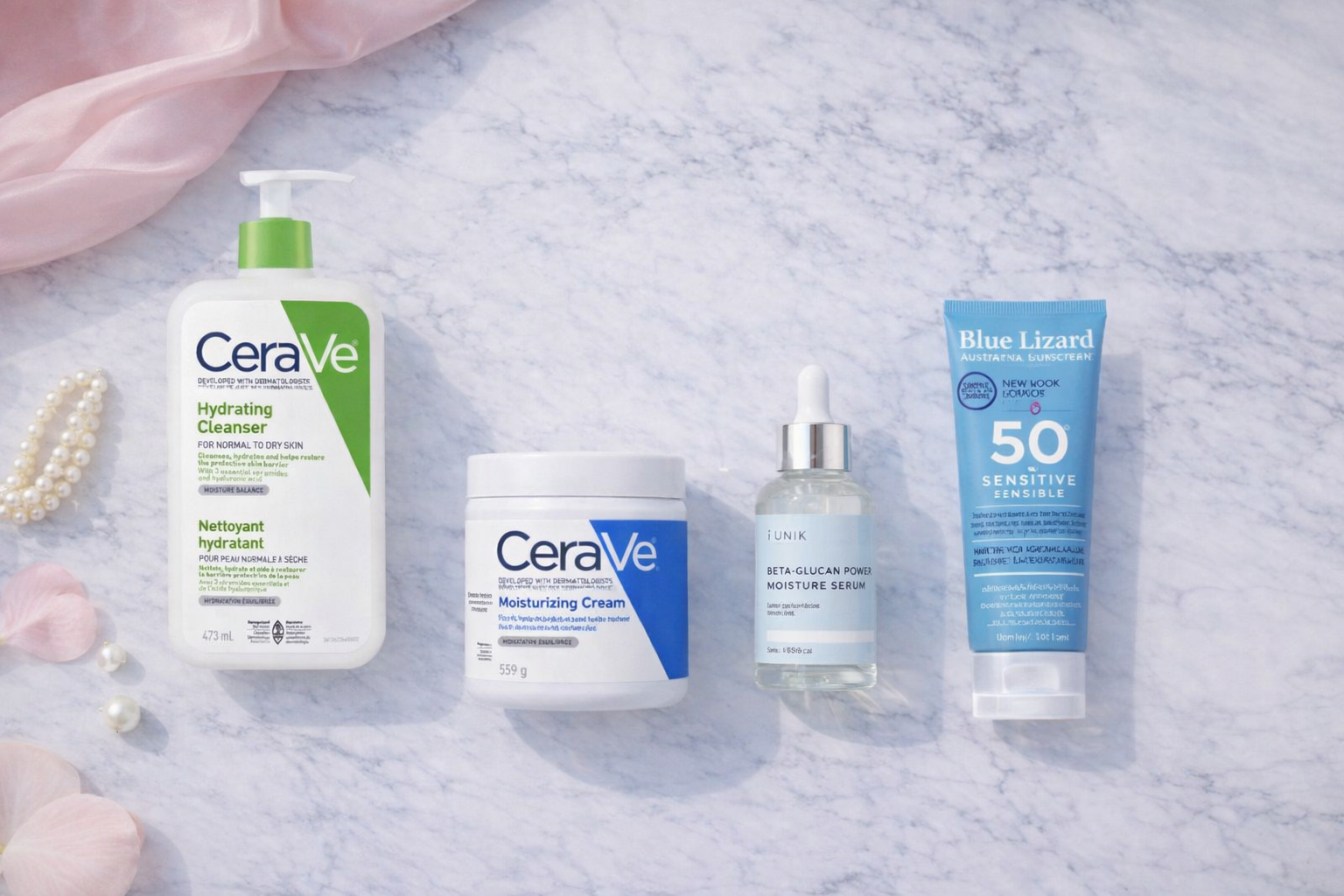
If your skin feels tight, reactive, rough, or depleted, a barrier-first routine usually makes more sense than a stronger treatment routine. One simple anchor step is a ceramide-based moisturizer, which is why CeraVe Moisturizing Cream fits this topic so well. It helps support barrier repair and reduces that stripped feeling that keeps skin stuck in stress mode.
If your skin feels especially depleted or irritated, an overnight comfort step can help too. That is where the BIODANCE Bio-Collagen Real Deep Mask fits best — not as a miracle cure, but as a hydration-first reset when your skin looks dull, tight, or overwhelmed.
How to Tell Over Time, Not Just in One Mirror Check
One of the best ways to tell whether you are dealing more with dehydration or barrier damage is to stop judging your skin from one random morning and instead look for patterns over 1–2 weeks.
Ask yourself:
• Do products sting more than they used to?
• Does my skin get red or flushed easily?
• Do I feel tightness without much irritation?
• Does my skin improve quickly with hydration?
• Did this start after actives, exfoliants, or acne products?
If your skin mainly improves when you hydrate more and cleanse more gently, dehydration may be the bigger issue. If it still feels reactive, stingy, and inflamed, barrier damage is probably the stronger driver.
The Bottom Line on Damaged Skin Barrier vs Dehydrated Skin
If your skin feels dull, tight, flaky, stingy, shiny, or randomly reactive, do not just assume it is "dry."
Dehydrated skin is mainly about low water.
Damaged skin barrier is mainly about weak function.
And yes, you can absolutely have both.
The real win is figuring out which one is driving the problem most, then simplifying your routine enough that your skin can actually recover. That is how you stop guessing, stop over-treating, and finally start getting your glow back.