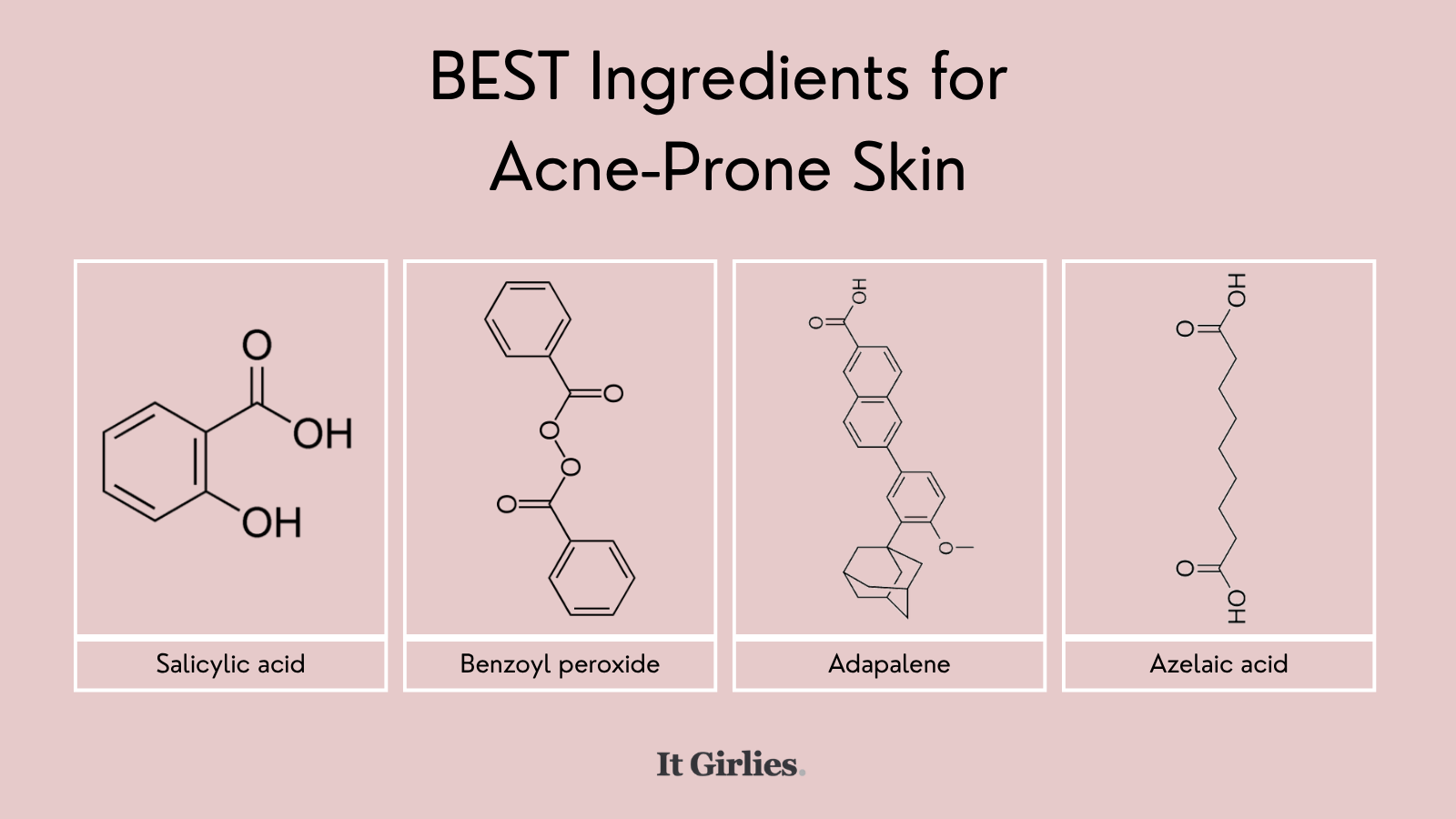
If you have acne-prone skin, one of the most frustrating things is not knowing which ingredients are actually worth using. One product says it clears pores. Another promises smoother skin. Another says it calms redness, fades post-acne marks, and repairs your barrier. And somewhere in the middle of all of that, your skin is still breaking out.
The truth is that acne-prone skin usually does not need more random products. It needs the right ingredients in the right routine.
Some ingredients are great for clogged pores and blackheads. Some are better for inflamed breakouts. Some help with redness, post-acne marks, or irritation caused by stronger treatments. And some sound impressive but may not be the thing your skin actually needs right now.
Not sure which ingredients actually fit your skin? Take the beauty quiz to find out what your skin may need more of, what may be making it worse, and which products may actually be worth keeping.
Below are some of the best ingredients for acne-prone skin — plus what each one actually does, who it tends to help most, and how it fits into a smarter skincare routine.
1. Salicylic Acid
Salicylic acid is one of the most well-known ingredients for acne-prone skin for a reason. It helps exfoliate inside the pore, making it especially useful for blackheads, whiteheads, and clogged pores. If your skin feels bumpy, congested, or prone to recurring texture, salicylic acid is often one of the first ingredients worth looking at.
It is especially useful if your acne is more about congestion than deep cystic breakouts. But like a lot of acne ingredients, more is not always better. Too much salicylic acid can leave your skin feeling tight, stripped, or irritated — especially if you are already using other actives.
Best for: clogged pores, blackheads, whiteheads, texture, oily acne-prone skin
Related decoder links: Niacinamide, Hyaluronic Acid

2. Benzoyl Peroxide
Benzoyl peroxide is one of the classic acne ingredients because it helps reduce acne-causing bacteria and is especially useful for inflamed pimples. If your breakouts tend to be red, swollen, or pus-filled rather than just clogged, benzoyl peroxide can be a very strong ingredient to know about.
The downside is that it can also be drying and irritating, especially if you start too strong or use it too often. That is why some people do better with lower strengths and a simpler routine around it.
Best for: inflamed breakouts, papules, pustules, recurring angry pimples
Pairs well with: barrier support, simple moisturizers, non-irritating cleansers
3. Adapalene
Adapalene is a topical retinoid that helps keep pores clear and can be extremely useful for acne-prone skin that deals with a mix of blackheads, whiteheads, and breakouts. It is often one of the best ingredients for people who need more than a surface-level spot treatment and want something that helps prevent breakouts more strategically over time.
Like other retinoid-type ingredients, adapalene can be irritating at first if you overdo it. That does not automatically mean it is wrong for you — but it does mean your barrier and the rest of your routine matter.
Best for: comedonal acne, recurring breakouts, oily skin, prevention-focused acne routines
Supportive ingredients to pair with it: Ceramide NP, Hyaluronic Acid, Sodium Hyaluronate
4. Azelaic Acid
Azelaic acid is one of the most underrated ingredients for acne-prone skin. It can help with acne while also being useful for redness, post-acne marks, and visible inflammation. If your skin breaks out but also looks reactive, blotchy, or easily irritated, azelaic acid is often a strong ingredient to consider.
It is also one of the more versatile ingredients because it can fit into routines for both breakouts and acne aftermath.
Best for: acne + redness, post-acne marks, more reactive acne-prone skin, uneven tone
5. Niacinamide
Niacinamide is not always the main acne-fighting ingredient in a routine, but it can be a very useful supportive ingredient. It may help with oiliness, visible redness, and overall skin balance, and it often shows up in routines that need more support and less chaos.
It is not a magic ingredient for everyone, and in some routines it is overused or layered into too many products at once. But when it is used in a balanced way, it can help support acne-prone skin without the same level of irritation that stronger actives can cause.
Best for: oily skin, inflamed acne, redness, support around harsher actives
Decoder link: Niacinamide
6. Sulfur
Sulfur does not get as much attention as salicylic acid or retinoids, but it can be very useful for certain acne-prone skin types — especially if you are looking for a more targeted ingredient for blemishes and congestion. Some people with oily, breakout-prone skin find sulfur especially useful in spot treatments or focused acne products.
That said, sulfur can also be drying, and it is usually not the ingredient to build your entire routine around. It tends to work best as part of a bigger strategy.
Best for: spot treatment support, oily acne-prone skin, occasional blemishes, congestion
7. Gentle Hydration and Barrier-Supportive Ingredients
A lot of people with acne-prone skin focus so hard on "treating the acne" that they forget that acne-prone skin still needs hydration and barrier support. If your routine is all exfoliation, spot treatments, and actives, your skin can end up more inflamed, more irritated, and even more breakout-prone.
That is why ingredients like ceramides, hyaluronic acid, sodium hyaluronate, and panthenol matter. They may not be the headline acne ingredient, but they can help your skin tolerate acne treatments better and feel less reactive overall.
Best for: barrier support, dehydration, irritation, reducing routine overload
Decoder links: Ceramide NP, Hyaluronic Acid, Sodium Hyaluronate
8. Retinoid Support Ingredients vs Retinoid Overload
If you already use a retinoid or retinol product, your skin may not need more exfoliation piled on top of it. A lot of acne-prone people accidentally create routines that are too aggressive because they mix a retinoid with frequent acids, drying cleansers, and extra actives. That can backfire fast.
If your skin is acne-prone but also irritated, shiny-dehydrated, flaky, or suddenly reactive, the answer might not be another active. It might be a better support system around the active you already use.
Decoder link: Retinol
What Ingredients Are Best for Different Types of Acne?
For blackheads and clogged pores: salicylic acid, adapalene
For inflamed red pimples: benzoyl peroxide, azelaic acid, niacinamide
For acne + redness: azelaic acid, niacinamide, barrier-supportive hydration
For acne-prone skin that is also irritated: fewer actives, more barrier support, gentler product selection
For post-acne marks: azelaic acid, niacinamide, sunscreen consistency
Take the quiz to get a more personalized answer: Find Out What Your Skin Actually Needs

How to Build an Acne-Prone Skin Routine That Actually Makes Sense
The best acne-prone skin routine is usually not the one with the most products. It is the one with the most purpose.
A smarter acne-prone routine usually looks more like this:
- a cleanser that does not leave your skin stripped
- one core treatment ingredient that matches your main acne pattern
- hydration and barrier support so your skin can tolerate treatment
- daily sunscreen, especially if you are using actives
- fewer random extras that do not clearly help
If your routine still feels confusing, repetitive, or too aggressive, use the Product Decoder to look up ingredients and products, then take the beauty quiz for a more personalized direction.
Skin Barrier Repair Routine
A curated routine to repair, strengthen, and protect your skin barrier.
Shop the Routine →Related Ingredient Decoder Pages
Final Thoughts
If you have acne-prone skin, the best ingredients are not always the strongest ones. They are the ones that actually match your skin, your breakout pattern, your tolerance level, and the rest of your routine.
For some people, that means salicylic acid. For others, benzoyl peroxide or adapalene may make more sense. For others, the missing piece is azelaic acid, niacinamide, or simply more barrier support and less overload.
The goal is not to collect skincare. The goal is to build a routine that works.
Take the beauty quiz now to find out which ingredients may actually fit your skin, which products may be worth keeping, and what your acne-prone routine should look like next: Take the Quiz