If PDRN keeps showing up in your feed, in K-beauty launches, and in every "regenerative skincare" conversation lately, you are not imagining it. PDRN is officially having a moment.
And honestly, it makes sense. People are tired of skincare that feels like punishment. They still want smoother, brighter, more resilient skin, but they do not necessarily want to exfoliate their face into emotional damage to get there. So when an ingredient shows up with a whole "repair, recovery, bounce, glow, resilience" kind of reputation, of course people are interested.
The thing is, PDRN is also one of those ingredients that gets talked about like it is either the future of skin healing or the next overhyped luxury serum trend, depending on who you ask. Which means if you are trying to figure out which PDRN skincare products are actually worth your money, the noise is… a lot.
So this post is not just a random roundup. We are going to break down what kinds of PDRN products make the most sense, who they may be good for, what skin goals they are best at supporting, where topical PDRN likely fits compared with professional treatments, and which product style is the smartest buy depending on whether your skin is dull, damaged, post-acne, or just not looking like itself lately.
If you are completely new to the ingredient, start with What Is PDRN in Skincare? Benefits, Side Effects, and Is It Actually Worth It? first. That post breaks down the science, the hype, and the difference between topical PDRN and in-clinic treatments.
This page contains affiliate links. If you purchase through these links, we may earn a small commission at no extra cost to you. We only recommend products we genuinely think fit the category and routine.
What PDRN Products Are Actually Best For
Before we even get into recommendations, it helps to reset expectations. PDRN is not a "fix every skin issue overnight" ingredient. It makes the most sense in routines focused on:
- recovery and skin resilience
- post-acne skin that looks stressed or uneven
- dullness and flat-looking skin
- texture support
- barrier-friendly, lower-irritation skincare
- post-procedure or sensitized skin support
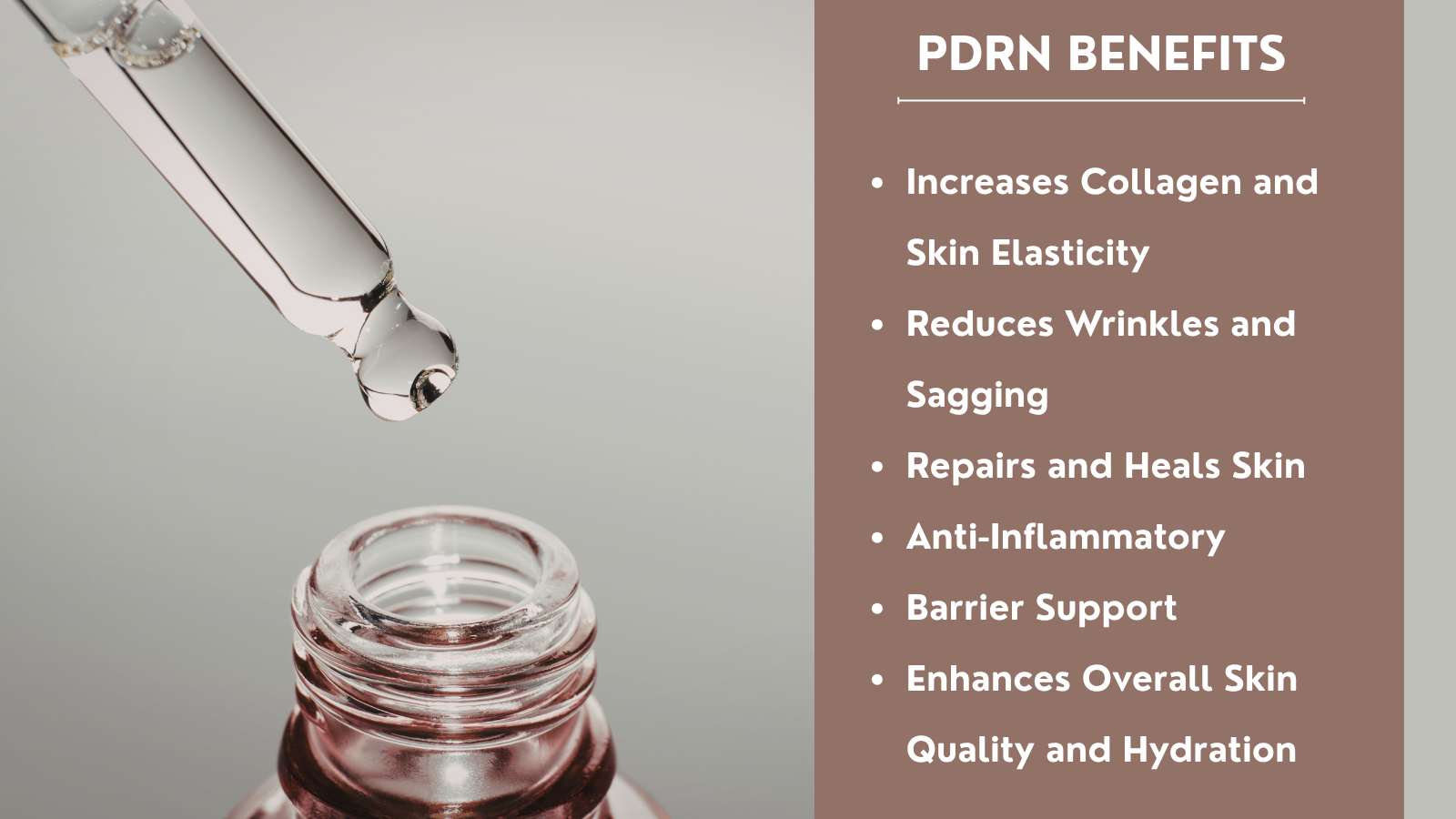
PDRN, or polydeoxyribonucleotide, has a more medically rooted background in wound healing, repair, and anti-inflammatory activity than most trend ingredients. Reviews of the pharmacology and clinical use of PDRN describe tissue-repair, anti-inflammatory, and regenerative effects, which is a big reason aesthetics and skincare brands became so interested in it. You can read that review here.
That is also why PDRN products usually fit better into a "calm, restore, improve skin quality over time" routine than a "blast every problem with the strongest active possible" routine.
What Kind of PDRN Product Should You Buy?
This is where a lot of people waste money. They hear PDRN is good, then buy the first pretty bottle they see without thinking about what category makes the most sense for their actual skin.
In real life, PDRN products usually show up in a few main formats:
1. PDRN serums and ampoules
This is the most common and usually the smartest place to start. Serums let you try the ingredient without turning your whole routine upside down. They are usually positioned around glow, smoothness, elasticity, hydration support, and skin recovery.
2. PDRN moisturizers or creams
These make more sense if your skin is dry, barrier-damaged, post-procedure, or generally craving comfort more than treatment energy. A PDRN cream can fit nicely if your goal is support, softness, and recovery rather than just cosmetic brightness.
3. PDRN masks or treatment-style products
These are usually more about a temporary comfort-and-glow effect layered over the ingredient story. Sometimes they are nice. Sometimes they are mostly vibes. This is where I would be more selective.
4. PDRN skin boosters or in-clinic treatments
These are not really normal skincare purchases, but they matter because they influence expectations. A lot of the stronger aesthetic-literature conversation around polynucleotides and PDRN comes from professional treatment contexts, not just ordinary topical serums. A 2024 review of polynucleotides in aesthetic medicine describes improvements in skin texture, hydration, elasticity, wrinkle depth, and overall facial appearance in human studies, though the findings are not perfectly uniform. That review is here.
That means a well-formulated topical PDRN serum may still be worth trying, but it should not automatically be judged like an injectable treatment.
Who Should Actually Try PDRN Skincare?
PDRN makes the most sense if you are in one of these categories:
- Your skin looks dull, stressed, or a little tired lately.
- You want glow and smoother-looking texture without using something really harsh.
- Your barrier feels fragile or your skin is easily irritated.
- You are dealing with post-acne skin that looks uneven, flat, or less resilient.
- You are into skin quality more than "instant dramatic anti-aging."
- You like the whole regenerative skincare category and want something that feels smarter than random trend serum marketing.
If your skin is currently irritated, tight, stingy, or unstable, PDRN may be interesting, but the basics still matter more. If that is where your skin is at right now, read How to Repair Your Skin Barrier too, because that foundation matters more than people think.
What Makes a PDRN Product Worth Buying?
Not all PDRN products are worth it just because they say PDRN on the bottle.
What matters more is:
- the overall formula
- whether the product is meant for your skin goal
- whether it pairs PDRN with actually useful support ingredients
- whether it avoids unnecessary irritation
- whether you are expecting realistic results from a topical product
That is why I would rather recommend a well-formulated, supportive PDRN serum than a random "luxury regenerative" cream that is mostly fragrance and marketing.
Experimental research also supports the broader idea that PDRN-related ingredients may have barrier-improving and wound-healing relevance. That study is here. But the lesson is not "buy anything with PDRN." The lesson is that the ingredient story is real enough that formulation quality actually matters.
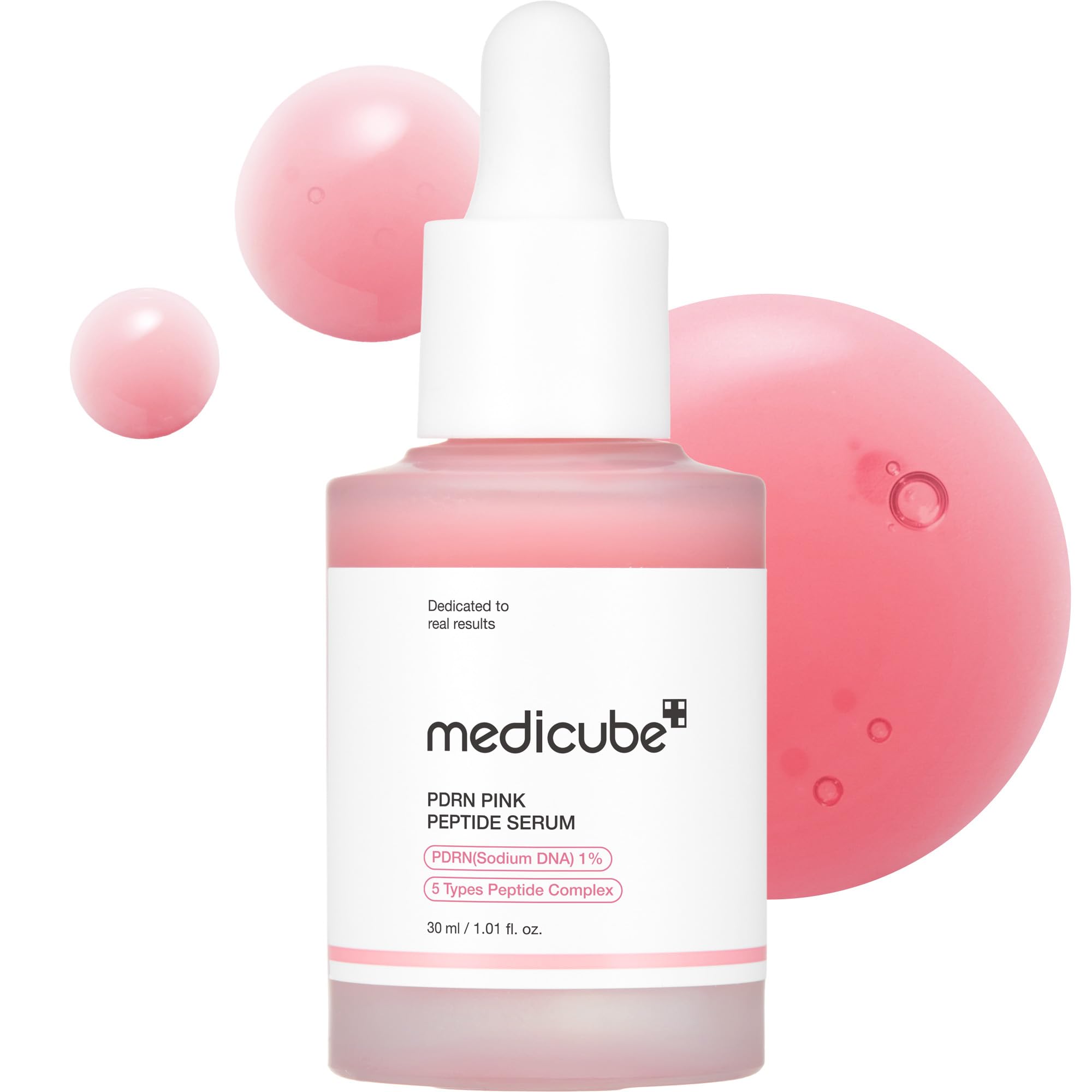
The Product I Would Feature First: Medicube PDRN Pink Peptide Serum
If you want one product angle that feels on-brand, relevant, and actually buyable, the Medicube PDRN Pink Peptide Serum sits in the sweet spot between trend relevance and practical use. It is positioned for glow, dullness, elasticity, and skin resilience rather than being marketed like some fake "miracle injectable in a bottle" fantasy.
What makes it a smart pick:
- a glow-focused PDRN product in an easy serum format
- no whole routine overhaul needed — it fits right in
- sounds elegant rather than aggressive
- designed for dull, tired, uneven-looking skin
 Medicube PDRN Pink Peptide SerumShop on Amazon
As an Amazon Associate I earn from qualifying purchases to help keep this site running
Best PDRN Product Type for Glowy Skin
If your main goal is glow, prioritize a PDRN serum or ampoule over a cream first. Glow-seeking shoppers usually want the ingredient in a more concentrated-feeling, lightweight step that layers easily under moisturizer and sunscreen. They want bounce, radiance, smoother-looking texture, and that healthy-looking skin finish — not something heavy that makes them feel greasy or overloaded.
Best PDRN Product Type for Damaged or Sensitive Skin
If your skin is damaged, reactive, or post-procedure, do not chase the flashiest PDRN formula. Prioritize:
- a simpler formula
- less fragrance
- less active overload
- supportive ingredients like panthenol, ceramides, or humectants alongside the PDRN story
Basically, the more damaged your skin barrier is, the less you should shop by "wow factor" and the more you should shop by tolerance and routine fit. PDRN can be genuinely interesting here because it often sits in the lower-irritation, recovery-adjacent category. But if your skin is already inflamed, barrier basics come first.
Best PDRN Product Type for Post-Acne Skin
This is one of the more interesting uses for PDRN. If your skin is not actively breaking out but still looks flat, uneven, stressed, rough, or less resilient after acne, PDRN can make more sense than immediately reaching for another strong exfoliating or resurfacing cycle. Post-acne skin often needs support as much as correction.
That is where a PDRN serum may fit especially well:
- it supports a skin-quality angle
- it feels less aggressive than stronger resurfacing products
- it can layer into a routine already focused on calming the skin down
If your breakouts overlap with barrier damage, read Can a Damaged Skin Barrier Cause Breakouts? Yes — Here's How, because that cycle explains a lot.
What I Would Skip
If I were trying to save money and avoid overhype, I would be cautious with:
- super expensive PDRN creams with vague claims
- products that scream "regenerative" but do not tell you anything useful about the actual formula
- PDRN products loaded with fragrance or irritation risks
- marketing that implies a serum works like a skin booster injection
That is the line I keep coming back to with this ingredient. PDRN is interesting enough to take seriously, but not so magical that it cancels out common sense.
How to Add a PDRN Product Into Your Routine
The best way to use a topical PDRN product is usually very unexciting, which is exactly why it works.
- Cleanse gently.
- Apply your PDRN serum or ampoule.
- Follow with moisturizer.
- Use sunscreen in the morning.
That is it. You do not need a ten-step routine just because the ingredient sounds futuristic.
The biggest mistake is adding PDRN into an already overcomplicated routine and then trying to judge whether it "works." If you are layering it with strong exfoliants, retinoids, acne treatments, fragrance-heavy formulas, and random trend products all at once, it becomes impossible to tell what is helping and what is just stressing your skin out.
What Results Should You Realistically Expect?
With topical PDRN skincare, the realistic expectations are usually things like:
- skin looking a little calmer
- better hydration support
- smoother-looking texture
- a softer glow
- better overall skin quality with consistency
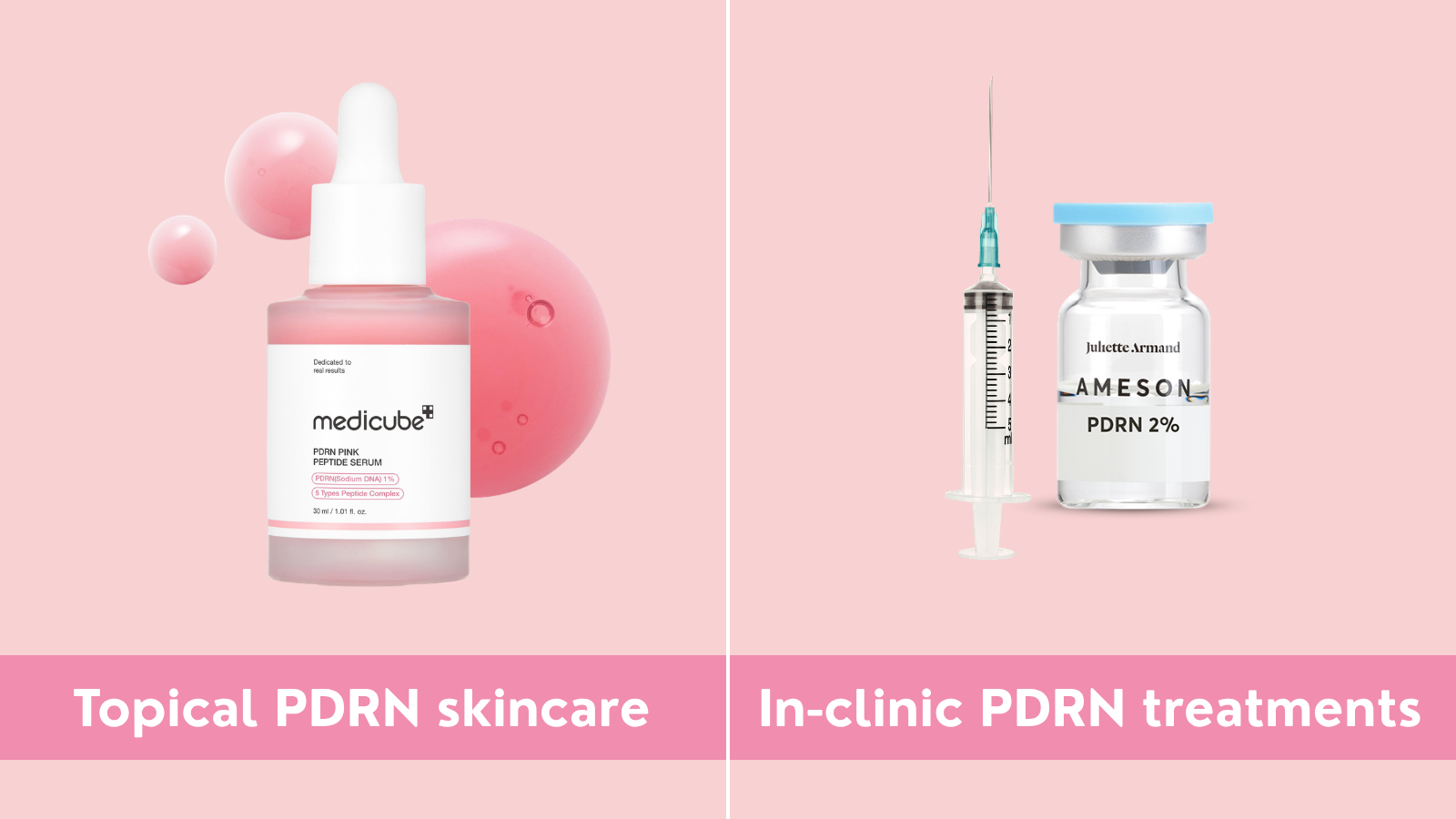
What I would not expect is instant dramatic transformation like an injectable treatment, a resurfacing procedure, or a full-blown in-clinic skin booster result. That is where people get disappointed.
If you buy PDRN for "my skin has looked tired and I want it to feel stronger, calmer, smoother, and more radiant over time," the ingredient makes more sense. If you buy it for "I want one bottle to replace professional treatments," that is where the mismatch starts.
So Which PDRN Product Should You Actually Buy?
If I had to simplify it:
- For glow and smoother texture: start with a serum.
- For fragile, dry, or sensitized skin: look for a simpler recovery-focused formula or cream.
- For post-acne skin that looks flat or stressed: a serum is usually the best first step.
- For big transformation expectations: be realistic, or look into professional treatments instead of overexpecting from topical skincare.
The Bottom Line
The best PDRN skincare products are not necessarily the most expensive or the most dramatic-sounding. They are the ones that match what PDRN is actually good at: support, recovery, skin quality, and calmer glow-focused improvement over time.
Start with a serum. Keep the routine simple. And if you want a version that fits your skin without sounding scammy, feature the kind of PDRN product that supports glow, elasticity, and resilience — not fake "miracle skin regeneration" claims.
PDRN is promising. But the smartest way to shop it is still the least dramatic one.